
Chairs: Carina Dantas, Andrea Marinho, Lars Münter & Nina Sønderberg
Mission and objectives
The primary objective of this workshop is to equip participants with practical, transferable methods for adapting personas used in development and implementation of digital public health, to diverse Low- and/or Middle-Income Country (LMIC) contexts, using a participatory and design-based approach.
Specifically, the workshop aims to:
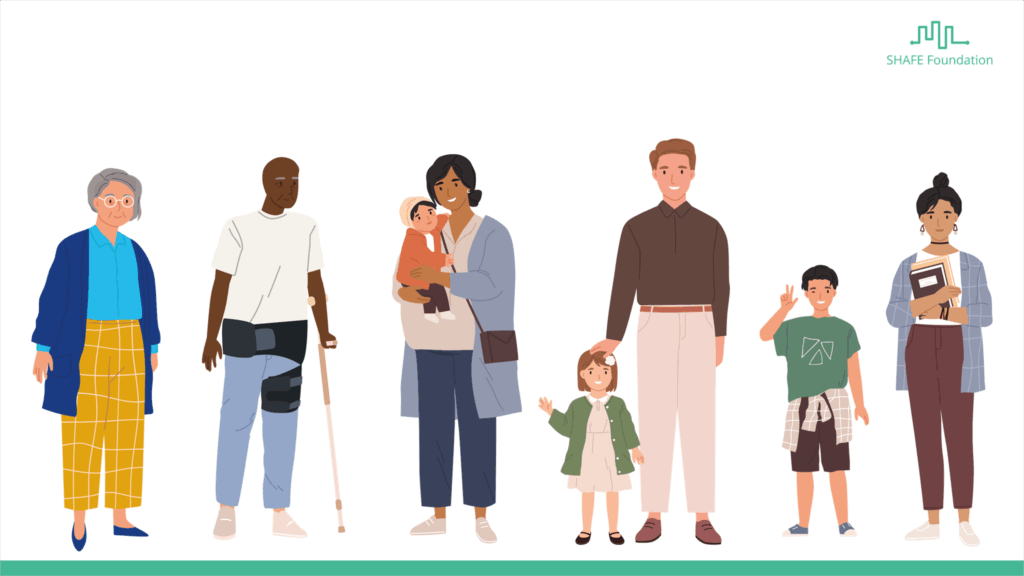
- Introduce participants to personas, such as the GARCIA family and SIRENE project personas, being currently adapted to MICs within the MULTIPULM project.
- Enable participants to contextualise and adapt personas based on country-specific socio-cultural, economic, health system, and digital infrastructure factors.
- Foster cross-country and cross-disciplinary learning by leveraging participants’ lived experience, professional expertise, and national contexts.
- Generate context-aware persona adaptations that can inform implementation, policy design, and evaluation of digital public health interventions in LMICs.
- Encourage critical reflection on the limitations and ethical considerations of persona-based approaches when transferred across regions and cultures in the context also of emerging digitalisation – both for access like in the myHealth@MyHands Digital Europe project or in the use of AI in multicultural care settings as in the CARING-AI project.
Themes and topics
This workshop directly contributes to current debates and practice in Digital Public Health (DPH) by addressing the persistent gap between digital innovation design and real-world implementation, particularly in Low- and Middle-Income Countries. It focuses on human-centred design approaches in digital public health, emphasising the importance of contextualisation and localisation of digital tools to ensure relevance and usability across diverse settings. The session also engages with issues of equity, inclusion, and ethics in digital health implementation, highlighting how participatory methods can support more inclusive policy and programme design at every level. In addition, the workshop explores the use of personas as boundary objects that bridge research, practice, and policy, and examines the challenges and opportunities involved in the cross-cultural adaptation of digital public health interventions.
The session aligns with key global priorities, including strengthening health systems through digital innovation, advancing equitable access to digital public health solutions, supporting context-sensitive approaches to implementation science, and promoting participatory and inclusive practices in global health. By focusing on LMIC contexts, the workshop addresses an urgent need for methodological tools that acknowledge heterogeneity in digital readiness, governance structures, health literacy, and socio-cultural norms.
Intended audience
The workshop is intended for:
- Digital public health researchers
- Global health practitioners
- Policymakers and public sector professionals
- Implementation scientists
- Digital health innovators and technologists
- NGO and international organisation staff
- Early-career researchers and doctoral students
Expected outcomes
Participants will leave the session with:
- A clear understanding of how personas can support equitable digital public health implementation.
- Hands-on experience adapting personas to LMIC contexts.
- Practical insights applicable to research, policy-making, and programme design.
Agenda
| Time | Session Segment |
|---|---|
| 0-5 minutes | Welcome and Framing |
| 5-10 minutes | Persona Introduction |
| 10-30 minutes | Interactive Group Work: Persona Adaptation |
| 30-40 minutes | Group Feedback and Discussion |
| 40-45 minutes | Wrap-Up and Key Takeaways |
Speakers
SHINE 2Europe
SHINE 2Europe
Nordic Wellbeing Academy
Nordic Wellbeing Academy