

Chairs: Celine Tabche & Prof Salman Rawaf
Mission and objectives
Healthcare practice towards 2035 will be shaped by digital transformation, population ageing, climate-related threats, new models of care, misinformation, changing public expectations, and persistent workforce pressures. Technological proficiency matters, but so do enduring human and professional capabilities: compassionate communication, emotional intelligence, critical judgement, adaptability, ethical practice, collaboration and systems thinking. This workshop asks not only which competencies future healthcare and public health professionals will need, but also how educators and employers can teach and assess them.
Building on published WHO competency frameworks and interdisciplinary health professions education, the workshop will combine selected peer-reviewed research contributions with a structured, scenario-based co-design exercise. Participants will compare perspectives across health systems and develop an exploratory competency map for 2035. The exercise is a stakeholder consultation, not a prediction of the future or a formally validated consensus framework.
Objectives
- Analyse changes in digital public health and wider health systems that may reshape professional work towards 2035.
- Identify enduring, evolving, and potentially emerging competencies across human, cognitive, digital, ethical, leadership and systems domains.
- Compare competency priorities across professional roles and different geographical and resource settings.
- Translate selected competencies into observable learning outcomes, practical training methods and assessment approaches.
- Generate an initial research and educational agenda for subsequent international collaboration.
Topics and perspectives
Human-centred care and emotional intelligence; critical thinking and information literacy, responsible digital and AI-enabled practice, interprofessional collaboration, adaptability and leadership, ethics and accountability, population health, climate resilience, emergency preparedness, equity, and sustainable health systems.
Intended audience
Public health and clinical professionals, health professions educators, researchers, students, workforce planners, policymakers, digital public health specialists, allied health professionals and representatives of health systems and international organisations. The workshop is designed for interdisciplinary participation and is relevant across high-, middle- and low-resource settings. Planning assumption: approximately 25-40 participants, subject to room capacity.
Expected outcomes
- A preliminary stakeholder-informed Healthcare Professional of 2035 competency map, differentiating enduring and evolving capabilities.
- A competency-to-education matrix linking priority capabilities with suggested learning outcomes, teaching activities and assessment approaches.
- An indicative list of workforce capacity-building priorities, barriers and cross-context considerations.
- A concise workshop synthesis outlining points of convergence, disagreement and future research questions; opportunities for international educational collaboration.
Format and schedule (provisional)
| Time | Session | Participant engagement |
|---|---|---|
| 0-10 min | Opening and future workforce drivers | Brief framing and live polling |
| 10-30 min | Selected research presentations | Up to three peer-reviewed abstract/paper contributions; final number depends on submissions and allocated duration |
| 30-40 min | Cross-cutting discussion | Chair-led synthesis of research insights and contrasting viewpoints |
| 40-65 min | Scenario-based competency mapping | Three or four facilitated interdisciplinary groups use different scenarios and a common mapping worksheet. |
| 65-80 min | Report-back and prioritisation | Groups identify key competencies, teaching implications and implementation barriers; indicative participant voting |
| 80-90 min | Synthesis and next steps | Discuss preliminary map, limitations, educational actions and opportunities for collaboration. |
Four distinct co-design scenarios
Group A: Digitally enabled, person-centred care: remote monitoring and algorithm-supported services raise questions about trust, communication, accessibility and professional judgement.
Group B: Public health emergency, misinformation and trust: a rapidly evolving outbreak demands evidence appraisal, risk communication, community engagement and ethical leadership.
Group C: Climate-related pressures and constrained services: extreme weather, chronic illness and limited resources require preparedness, equity-conscious decisions and systems coordination.
Group D: Ageing, multimorbidity and integrated care: fragmented services and complex needs require collaboration across healthcare, public health and social care, shared decision-making and continuity.
If only three groups are feasible, the organising team will combine or rotate scenario coverage while retaining distinct scenario briefs and a common reporting template.
Workshop participation and data use
Group worksheets and polling will facilitate discussion and produce an anonymised summary of workshop themes, subject to applicable institutional guidance. Workshop attendance will not be treated as consent for research. Any systematic research use of participant-level contributions or identifiable materials will require an appropriate prospective ethics and data-governance determination, information and consent procedures where required. Outputs will not be presented as a validated international competency framework.
Speakers
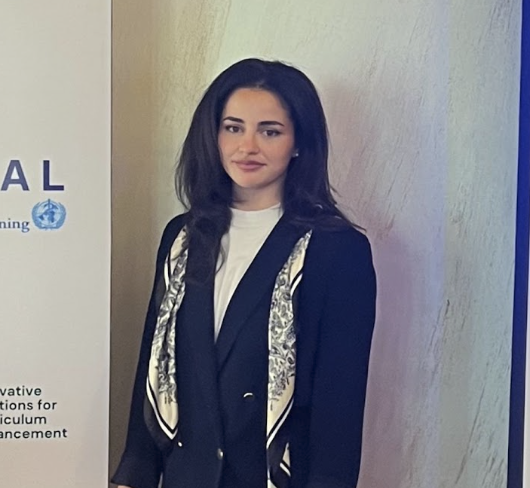
Imperial College London, United Kingdom
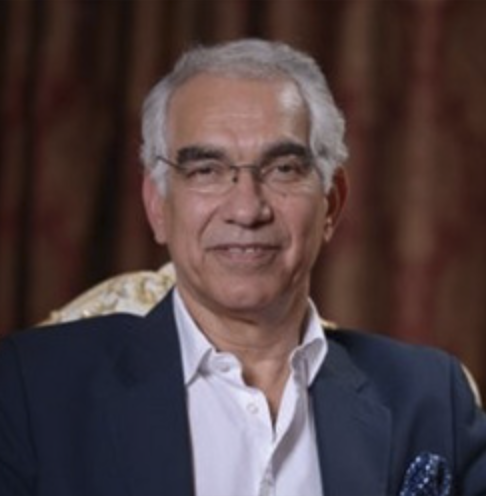
Professor Salman Rawaf (Co-Chair)
Imperial College London, United Kingdom

Imperial College NHS Trust, WHO Collaborating Centre team at Imperial College London
Facilitators
Selected oral contributors will be identified through the workshop’s peer-reviewed Call for Papers/Abstracts and added after decisions.
Background references
- World Health Organization. Global competency and outcomes framework for universal health coverage. Geneva: WHO; 2022. Available from: https://www.who.int/publications/i/item/9789240034662
- World Health Organization. Global competency and outcomes framework for the essential public health functions. Geneva: WHO; 2024. Available from: https://www.who.int/publications/i/item/9789240091214
- World Health Organization. Working for health 2022–2030 action plan. Geneva: WHO; 2022. Available from: https://www.who.int/publications/i/item/9789240063341