Chairs: Margarida Afonso, Joana Silva & Dr Aisha Aldosery
Mission and objectives
Digital health research increasingly requires researchers to work directly with complex, routinely collected health data rather than with ready-made analytical datasets. At the same time, large language models (LLMs) openining new ways to query, analyse and summarise health information, and they are moving quickly from research demonstrations into public health practise. They answer the public’s health questions, summarise outbreak reports, scan news and social media for early signals, and increasingly sit inside multi-step “agentic” pipelines that retrieve data, call tools and draft situation reports. Yet most of the evidence behind these systems still comes from benchmark questions, simulated users and short pilots. A model can score well on a question bank and still give outdated advice, miss a signal that arrived late, or produce a confident summary that no one on a surveillance team can trace back to its source.
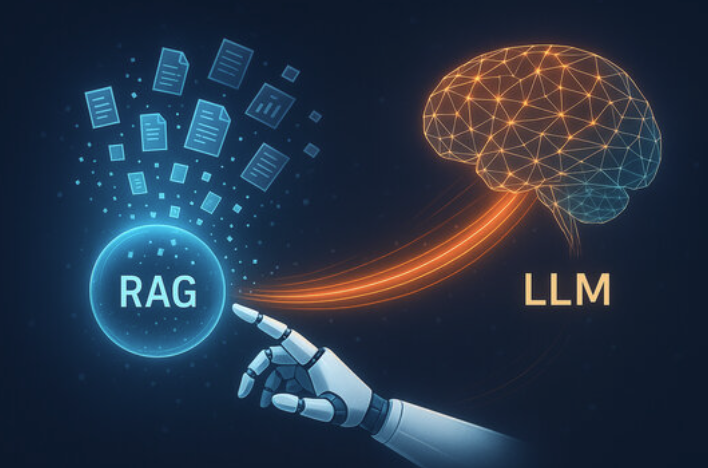
The workshop is built around two linked questions that sound simple and are not: how do we turn raw health records into reliable intelligence, and what evidence should convince us that an LLM-based system built on those data actually works for public health? When a more complex design is proposed, such as retrieval-augmented generation (RAG) or an agent with tools, how do we show that the extra complexity is worth it compared with a simpler baseline?
To address these questions, the session combines a hands-on tutorial with research paper session. The tutorial follows a single practical data journey: participants first use SQL to turn raw health records into an analysis-ready cohort, then apply with subsequent use of these data with LLM-based approaches to the same data and finally evaluate both the process and the result against a shared set of criteria.
Themes
A. Health data foundations. Working with routinely collected health records: data extraction, cleaning, linkage, cohort definition, data quality and reproducible SQL workflows.
B. LLM-based analysis and decision support. Using LLMs, RAG and agents to query, analyse and summarise health data for health information, surveillance and early warning.
C. Evaluation and evidence. Ground truth, meaningful baselines, grounding and provenance, uncertainty, failure modes, human oversight, and measures that go beyond answer accuracy.
Intended audience
The workshop is aimed at clinicians, public health professionals and epidemiologists, researchers in data science, LLMs, natural language processing and AI evaluation; digital epidemiologists and public health informaticians; surveillance and health communication practitioners from ministries of health and public health agencies; engineers building these systems; and researchers in AI governance and human–AI interaction.
Graduate students are very welcome. No prior experience of SQL or LLMs is required: concepts are introduced step by step and illustrated through a single shared case, so participants with different levels of experience can follow the same workflow. Participants will need a laptop; all data used in the tutorial will be synthetic or openly available, and setup instructions will be shared in advance.
Expected outcomes
By the end of the session, participants will be able to:
- extract, clean and structure routinely collected health records into an analysis-ready cohort using SQL;
- apply LLM-based approaches, including RAG, to query and summarise health data, and recognise where they fall short;
- evaluate LLM outputs against shared criteria: accuracy, grounding and traceability, timeliness, safety and operational cost;
- judge when a more complex design is justified compared with a simpler baseline.
Schedule and Contributors
| Part | Time | Activity |
|---|---|---|
| Part 1 | 30 min | From Health Records to Research-Ready Data with SQL |
| Part 2 | 30 min | AI assisted Intelligence Analysis with Large Language |
| Part 3 | 30 min | Evaluating LLM-based systems for health information, surveillance and early warning: hands-on evaluation exercise |
| 20 min | Break | |
| Part 4 | 90 min | Paper presentation |
Tutorial (Parts 1-3). Each part is a talk by one of the organisers, illustrated with live demonstrations on the same example dataset, so that the three parts form one continuous data journey. Part 1 shows how raw health records are turned into an analysis-ready cohort with SQL. Part 2 applies LLM-based approaches, including RAG, to the same data. Part 3 asks how we know whether these approaches work, covering evaluation criteria, meaningful baselines and common failure modes, and introduces the questions the papers will address.
Paper session (Part 4). Papers accepted through the workshop call will be presented, grouped so that they follow the same journey from data to analysis to evaluation. The session will be chaired by the organisers and will close with a short open discussion linking the papers back to the tutorial.
Participant engagement. Mixed groups in the exercise, live polling and audience questions during the talks (with at least ten minutes reserved for the floor), and a shared online document where participants can add to the checklist during and after the session.
Programme resilience. The three tutorial talks do not depend on submissions. If fewer papers are accepted, the remaining time will be used for longer discussion of the accepted papers and for questions on the tutorial.
Inclusivity and diversity. The workshop sits at the meeting point of computer science, epidemiology, health communication and policy, and the programme is designed to reflect that mix. The organising team itself spans industry, a regional health service and a national research institute in Portugal and Saudi Arabia. In buildingthe programme we will aim for:
- a Programme Committee balanced across gender, world regions and disciplines;
- accepted papers from more than one world region where the quality of submissions allows;encouraging submissions from early-career researchers and doctoral students;
- actively inviting submissions from low- and middle-income countries and from non-English-language settings, with cross-lingual evaluation explicitly in scope;
- pointing prospective authors to the DPH grant schemes
Speakers
Margarida Afonso (Chair and lead facilitator)
School of Engineering of the Technical University of Porto, Portugal
Local Health Unit of Baixo Alentejo (ULSBA), Portugal

King Abdulaziz City for Science and Technology (KACST), Saudi Arabia