
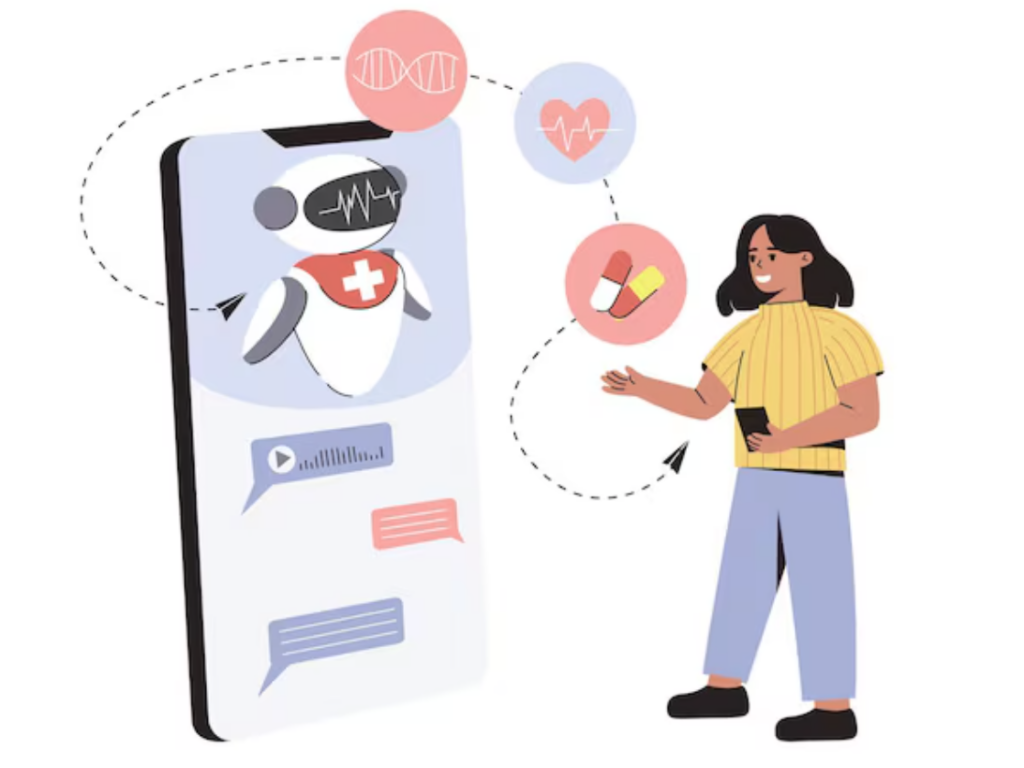
Chairs: Dr Kelly L’Engle & Dr Alark Joshi
Mission and objectives
AI chatbots and apps increasingly deliver health coaching to diverse populations at scale, often ahead of the evidence on what makes them effective, equitable, engaging, and trustworthy. Health and wellness coaching has a strong record of supporting behavior change and chronic disease management for physical and mental health outcomes. AI is now reshaping how coaching and health messages are tailored and delivered. Yet few practical frameworks exist for designing and appraising these tools, especially for culturally diverse communities.
This session combines a hands-on tutorial with a community showcase. The tutorial presents findings from a scoping review of 76 studies on AI coaching tools, offers five evidence-informed design principles, demonstrates their application in a working AI coach (Nala), and guide participants in practicing using AI to tailor health messages and images for a priority population. In the showcase, authors responding to our call for abstracts share their own AI-based coaching tools, and participants exchange ideas and build connections across projects and settings.
Objectives:
- Summarize the evidence from a scoping review on AI health coaching, and the five design principles that distinguish tools people trust and keep using: transparency, personalization, warmth, user autonomy, and sustained motivation.
- Recognize those principles, and the technical choices behind them, in a working AI coach for culturally tailed health and well-being and its and its AI-supported message bank.
- Use a generative AI tool to draft plain language, culturally tailored health messages and images, and evaluate them for cultural relevance, accuracy, and bias.
- Identify where human oversight and community input must remain in AI-assisted coaching.
- Learn from the design choices and lessons of other AI coaching tools, and build connections across projects.
Intended audience
Researchers, public health practitioners, health communicators and educators, designers, developers, and policymakers who develop, evaluate, or govern AI-enabled coaching, chatbots, or health messaging. No prior expertise in behavior change or AI development is required. Participants will need a laptop or tablet with access to a generative AI tool; free tools are sufficient.
Expected outcomes
By the end of the session, participants will:
- Apply a practical framework for designing and appraising AI coaching tools and AI- generated message banks.
- Gain hands-on experience tailoring health messages and images with AI, with a checklist for evaluating cultural relevance, accuracy, and bias.
- Build connections with others working on AI coaching, and take away examples of tools and design choices from the showcase.
Format and schedule
| Session | Description | Duration |
|---|---|---|
| Part 1: Tutorial | Opening: what separates AI coaching tools people trust from ones they abandon? Frame the evidence. | 10 min |
| Scoping review findings: five coaching strategies and five design principles, with context-specific think-pair-share. | 20 min | |
| Demonstration of principles in practice: Live demonstration of the AI coach Nala and its message bank. | 15 min | |
| Hands-on practice: Draft AI tailored messages and images, and iterate against design principles. | 30 min | |
| Debrief and guardrails: what worked, what felt off, and where humans must stay in the loop. | 15 min | |
| Part 2: Showcase | Welcome and overview of accepted contributions. | 5 min |
| Community Showcase: Demos and poster presentations by selected authors on their AI coaching tools. All presenters available for conversation. | 45 min | |
| Closing discussion: shared lessons and next steps. | 10 min |
Speakers

School of Nursing and Health Professions, University of San Francisco, USA

Department of Computer Science, University of San Francisco, USA