

Chairs: Joella Anupol & Marica Ferri
Mission and objectives
Awareness raising campaigns are one of the most common responses to drug-related issues, and they are increasingly delivered through social media. They are often launched as standalone interventions in response to public or political demand, without asking whether they are the right tool for the right population or whether they connect people to services. According to the latest European School Survey Project on Alcohol and Other Drugs (ESPAD), 56% of students reported taking part in awareness events in the past two years.
Digital environments add new challenges. Misinformation about drugs spreads rapidly online; algorithms shape who actually sees a message; generative AI makes content easy to produce but harder to quality-assure; and engagement metrics say little about effects on behaviour. The EU Drugs Strategy 2026–2030 and the mandate of the European Union Drugs Agency (EUDA) call for evidence-based awareness raising embedded within broader responses, in line with international standards on drug prevention.
To support this, the EUDA is developing a decision framework to help decide when and how to use awareness raising, and what to do instead when it is not the right response. This workshop invites researchers and practitioners to help shape that framework. Through presentations of papers accepted via the workshop Call for Papers and scenario-based work in mixed-discipline groups, public health and prevention professionals, data and AI researchers, industry and policymakers will explore what a decision framework for awareness raising should take into account in digital, misinformation-rich environments.
Its objectives are:
- To showcase current research and practice on digital awareness raising and drug-related misinformation through papers accepted via the workshop Call for Papers.
- To identify, from the perspective of each participating discipline, what a decision framework for awareness raising should take into account before, during and after a campaign is launched online.
- To identify the risks and opportunities of using digital channels for awareness raising.
- To build a shared understanding of what public health professionals and technology experts each need from the other to decide whether a campaign is the right response.
A summary of the key considerations raised will be shared with participants after the conference.
Intended audience
Public health and prevention professionals, researchers in health communication and digital health, data and AI researchers, industry representatives, policymakers and NGOs. No prior knowledge of drug policy is needed. We expect 25 – 40 participants, working in four to six mixed-discipline groups. Groups will be deliberately mixed by discipline, country and career stage. Each round begins with a few minutes of individual reflection, and an anonymous live polling tool will be available during the plenary so that everyone can contribute. Scenarios invite participants to consider the perspectives of the people campaigns aim to reach, including young people and people who use drugs, and how campaigns or algorithmic targeting may stigmatise or exclude them. Materials will be in plain language, and non-stigmatising language will be used throughout.
Expected outcomes
Participants will leave with a shared view of the decisions to make before and after launching a digital campaign.
Specifically, the workshop will:
- Gather expert input from research, practice and policy on what the EUDA decision framework on awareness raising should take into account.
- Identify risks and opportunities for awareness raising in misinformation-rich online environments.
- Produce a summary of key considerations for responsible digital awareness raising, to be shared with all participants after the conference.
- Strengthen dialogue between public health, prevention and technology communities on how campaigns can be embedded effectively in broader public health responses.
Format and schedule
| Session | Description |
|---|---|
| Opening session | The chairs welcome speakers and participants. The chairs introduce the EUDA’s work on awareness raising for drug-related issues, the rationale for a decision framework, and the digital challenges that frame the workshop. |
| Presentations of accepted papers | Authors of papers accepted through the workshop’s Call for papers present their work and reflect on how it relates to the workshop focus. Time per presentation will depend on the number of accepted papers. Speakers then join the group discussions. |
| Scenario-based group discussion | Each group works on a realistic scenario. Drawing on their own discipline and experience, participants discuss what a decision framework should take into account at each stage: – Round 1 on deciding: what should be considered when deciding whether a digital campaign is the right response, and what should be done instead when it is not? – Round 2 on designing and delivering: what digital factors, such as platform algorithms, AI-generated content and misinformation dynamics, should the framework address if a campaign goes ahead? How to address them? – Round 3 on monitoring and evaluating: once a campaign is online, what can go wrong, and what should the framework be able to detect early and assess its effects? |
| Plenary sharing | Group rapporteurs present key insights. The chair draws out common themes and points of disagreement, linking them to the presented papers. |
| Conclusions | Summary of the key considerations raised by the chairs, and link with the development of the decision framework. |
Speakers

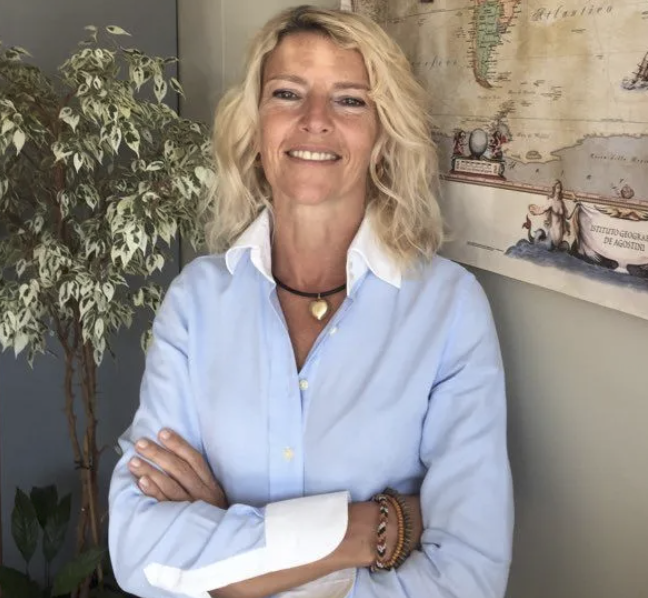
Joella Anupol, MSc (Chair and lead facilitator)
European Union Drugs Agency (EUDA), Portugal
European Union Drugs Agency (EUDA), Portugal